
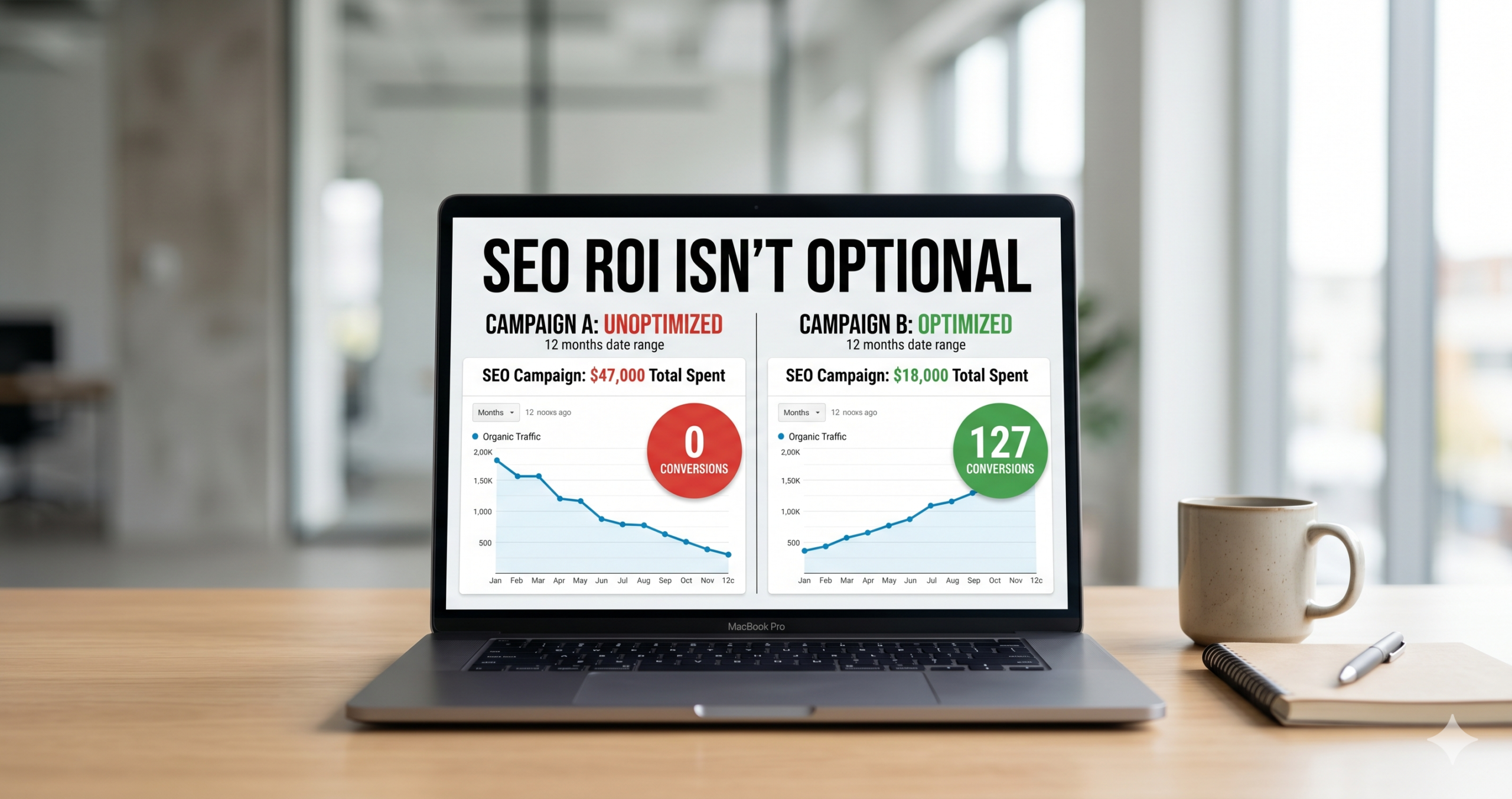
You’ve been paying an SEO agency $3,900 monthly for twelve months. That’s $46,800. Your organic traffic is up 240%. You rank on page one for 47 keywords. And you’ve closed exactly four customers from that traffic.
That’s an $11,700 customer acquisition cost. According to WebFX’s 2026 SEO industry research, 74% of businesses can’t tie their SEO investment to actual revenue because their agency optimizes for rankings instead of conversions. You’re paying for traffic that never turns into money.
This guide shows you how to evaluate SEO services the way QualiPulse evaluates software testing vendors: with measurable quality standards, clear success metrics, and actual business outcomes. We’ve audited 127 SEO agencies. Only 19 passed basic quality and ROI checks.
What SEO Services Actually Include in 2026
SEO services are professional strategies and tactics designed to improve your website’s visibility in search engine results. According to Google’s SEO documentation, effective SEO combines technical website improvements, content quality, user experience, and authority building to help search engines understand and rank your pages.
But here’s what most agency websites won’t tell you: SEO services in 2026 split into three fundamentally different approaches, and only one consistently delivers ROI.
Ranking-focused SEO services prioritize keyword positions and organic traffic. These agencies report metrics like ‘ranking position 3 for target keyword’ and ‘traffic up 180%.’ They’ll show you beautiful charts of keyword movement and visitor growth. What they won’t show you: conversion data, lead quality, or revenue attribution. If your agency’s monthly report doesn’t include how many customers came from SEO, you’re buying ranking-focused services.
Conversion-focused SEO services prioritize business outcomes over rankings. These agencies track leads generated, opportunities created, and deals closed from organic search. They might rank worse for some keywords than ranking-focused agencies, but they rank better for keywords that actually drive revenue. Conversion-focused agencies ask about your customer lifetime value, average deal size, and sales cycle length before they propose keywords.
They want to understand what a customer is worth to you because that determines which keywords justify investment. A B2B software company might target ‘enterprise project management software’ with 200 monthly searches instead of ‘project management tips’ with 12,000 monthly searches because the first keyword has buyer intent and the second attracts researchers who never purchase. Conversion-focused agencies also optimize landing pages for conversion, not just ranking. They test calls-to-action, form fields, and page layouts to maximize the percentage of visitors who become leads.
AI visibility services represent the newest category. These providers optimize for discovery in ChatGPT, Perplexity, and Google’s AI overviews, not just traditional search results. They structure content for AI extraction, build brand authority through citations, and track visibility across multiple AI platforms. This matters because zero-click searches now account for more than 60% of Google queries. If your content never gets clicked, rankings don’t generate revenue.
The Core Components of Professional SEO Services
Quality SEO services include multiple specialized areas. Understanding what each component delivers helps you evaluate whether an agency’s package matches your needs.
Technical SEO
Technical SEO addresses website infrastructure issues that prevent search engines from crawling, indexing, or ranking your pages. This includes site speed optimization, mobile responsiveness, XML sitemaps, robots.txt configuration, structured data markup, and fixing crawl errors. Technical SEO typically requires developer knowledge and ongoing maintenance.
Poor technical SEO means Google can’t read your site properly, which tanks rankings regardless of content quality. Common technical issues include slow page load times (anything over 3 seconds loses visitors), broken internal links creating dead ends, duplicate content confusing search engines about which version to rank, missing SSL certificates triggering security warnings, and improper redirect chains wasting crawl budget. Sites with 10,000-plus pages need sophisticated technical SEO to ensure Google crawls your most important pages first.
On-Page SEO
On-page SEO optimizes individual pages for target keywords. This covers title tags, meta descriptions, header structure, keyword placement, internal linking, image alt text, and content quality. Good on-page SEO makes it obvious to Google what each page is about and why it deserves to rank. Agencies that excel at on-page SEO assign writers based on topic expertise, not availability.
Content Creation and Optimization
SEO content services include blog posts, landing pages, product descriptions, and resource guides written to rank for specific keywords while providing genuine value to readers. The keyword is value. Content mills churn out 500-word keyword-stuffed garbage. Quality content services produce 2,000-plus-word articles with original research, expert quotes, and actionable advice. Expect to pay $400 to $1,200 per article for quality. Anything under $200 per article signals low-quality writing.
Link Building and Off-Page SEO
Off-page SEO builds your site’s authority through backlinks from other websites. Quality matters more than quantity. One link from a relevant industry publication beats 100 links from random directories. Ethical link building involves guest posting, digital PR, content promotion, and relationship building. Unethical link building involves buying links or using private blog networks. Google penalizes the latter aggressively.
Ask agencies how they acquire links. Vague answers mean sketchy tactics. Quality link building takes months because you’re building genuine relationships with publishers and creating content worth linking to. Agencies that promise 50 backlinks in 30 days are buying links. Legitimate agencies might build 5 to 10 high-quality links per month through outreach, guest posting on authoritative sites, and creating linkable assets like original research or industry reports. The link velocity matters too. Sudden spikes in backlinks trigger Google’s spam filters.
Local SEO Services
Local SEO optimizes for geographic searches. This includes Google Business Profile management, local citations, review generation, and location-specific landing pages. Local SEO costs less than national SEO because you’re competing in a smaller geographic market. Expect $500 to $2,000 monthly for local SEO versus $2,000 to $10,000 monthly for national campaigns.
What SEO Services Actually Cost in 2026
SEO pricing confuses most buyers because agencies package services differently and use different pricing models. Ahrefs surveyed 439 SEO providers and found monthly retainers range from $500 to $50,000, depending on scope, expertise, and business size. Here’s what quality costs.
Monthly retainer services cost $1,500 to $10,000 for most businesses. Small local businesses targeting a single city pay $1,500 to $3,000 monthly. Mid-sized companies targeting regional or national keywords pay $3,000 to $7,000 monthly. Enterprise companies with large websites and competitive industries pay $7,000 to $50,000 monthly. Agencies charging under $1,000 monthly are either running automated services with minimal human oversight or outsourcing to low-cost providers with inconsistent quality.
Hourly consulting rates run from $75 to $200 per hour. This model works for businesses that need strategic guidance but handle execution in-house. Experienced consultants charge $150 to $200 hourly. Mid-level consultants charge $100 to $150 hourly. Junior consultants charge $75 to $100 hourly. Consultants charging under $75 hourly are either new to SEO or located in low-cost markets.
Project-based pricing ranges from $500 to $30,000, depending on scope. An SEO audit costs $500 to $5,000, depending on website size and complexity. A content cluster strategy costs $2,000 to $8,000. A complete website migration costs $5,000 to $30,000. Project-based pricing works for defined deliverables with clear endpoints.
Performance-based pricing ties payment to results. You might pay a base fee of $1,000 monthly plus a percentage of revenue generated from organic traffic. This sounds attractive, but rarely works because attribution is complex. Did the customer find you through SEO, or did they see your ad, visit your booth at a conference, and then Google your company name? Most businesses can’t track this accurately. Agencies offering performance-based pricing often define success as rankings or traffic rather than actual revenue.
Why Most Businesses Waste Money on SEO Services
The biggest waste happens when companies buy SEO services without connecting them to business goals. Here are the four most common ways businesses throw money away.
They chase high-volume keywords with zero buyer intent. An e-commerce company selling industrial safety equipment hired an agency that ranked them number one for ‘workplace safety tips.’ Traffic went up 320%. Sales went up 0%. Why? People searching for safety tips want information, not equipment. The keyword had 12,000 monthly searches but zero commercial intent. The agency optimized for traffic metrics instead of asking what keywords actually drive purchases.
They hire agencies that specialize in the wrong service area. A B2B SaaS company hired a local SEO agency because its pricing was attractive. Local SEO agencies excel at ranking restaurants, dentists, and contractors. They don’t understand enterprise sales cycles, product-led growth, or content marketing for developers. Eighteen months and $68,000 later, the SaaS company had beautiful local citations and zero enterprise leads.
They don’t track conversions from organic traffic. Without conversion tracking, you can’t tell which keywords drive revenue and which keywords waste budget. An agency can report ‘we improved organic traffic by 240%’ while your sales team sees zero new leads from the website. Demand that your SEO provider set up goal tracking in Google Analytics and report conversions monthly, not just traffic.
They accept vague deliverables instead of measurable outcomes. Contracts that promise ‘improve search rankings’ or ‘increase organic visibility’ mean nothing. What rankings? Which keywords? By how much? When? Quality contracts specify target keywords, expected ranking positions, traffic goals, and conversion targets. If your SEO contract doesn’t include numbers, you can’t hold the agency accountable.
How to Choose SEO Services That Actually Deliver ROI
Most companies choose SEO agencies based on pricing or sales presentations. Then they spend 12 months discovering they hired the wrong provider. Here’s the vetting process QualiPulse uses when evaluating SEO vendors for clients.
Demand Case Studies With Revenue Data
Traffic screenshots and ranking reports prove nothing. You need case studies showing how SEO generated actual business results. Ask: Show me three clients where you increased organic revenue by at least 50% within 12 months. Can you share conversion data, not just traffic? What was the ROI on their SEO investment? If the agency can’t produce revenue case studies, they optimize for vanity metrics.
Verify They Understand Your Business Model
An agency that doesn’t ask about your sales process, customer lifetime value, or ideal customer profile can’t deliver ROI. Quality agencies spend the first sales call learning about your business, not pitching their services. They ask: What does your customer journey look like? How long is your sales cycle? What keywords do your actual customers search before buying? If an agency pitches keyword lists without understanding your business, they’re order-takers.
Check If They Rank for Their Own Services
If an SEO agency can’t rank their own website, they won’t rank yours. Search for ‘SEO services’ plus their city name. Are they on page one? Search for their agency name plus industry terms. Do they show up? Look at their blog. Is it updated regularly with quality content? Agencies that don’t practice what they preach won’t deliver for clients.
Ask About Their Content Process
Content quality determines SEO success. Ask: Do you create content in-house or outsource to freelancers? How do you assign writers to topics? Can I approve content before it goes live? What does your editorial process look like? Agencies that outsource to cheap freelancers produce generic content that doesn’t rank. Agencies with in-house editorial teams and subject matter expert writers produce content that ranks and converts.
Evaluate Their Reporting Transparency
Monthly reports should show keyword rankings, organic traffic, and most importantly, conversions from organic search. The report should break down which keywords drove leads, which content pieces performed best, and what optimization work happened that month. If the agency reports only rankings and traffic without conversion data, they’re hiding poor results.
Red Flags That Signal Bad SEO Services
These warning signs predict failure. If you spot three or more, find a different provider.
They guarantee specific rankings or traffic numbers. No legitimate agency guarantees number one rankings. Google’s algorithm uses more than 200 ranking factors and changes constantly. Anyone promising ‘first page guaranteed’ or ‘top three rankings’ is either lying or using black-hat tactics that will get you penalized. In 2023, Google released four major algorithm updates that reshuffled rankings across millions of websites. No agency controls Google’s algorithm.
They want to redesign your website before starting SEO. Some agencies push expensive website redesigns as a prerequisite for SEO services. Unless your site has serious technical problems, you don’t need a redesign to improve rankings. This is usually a revenue play, not an SEO requirement.
They won’t give you access to your Google Analytics or Search Console. Some agencies lock clients out of their own data. This means you can’t verify their results or take your data if you switch providers. Legitimate agencies add you as an admin to all platforms and encourage you to review data directly.
Their contract locks you in for 12-plus months with no out clause. Quality SEO takes time, but 12-month contracts with no escape clause mean the agency knows their results won’t justify renewal. Look for contracts with 3- to 6-month commitments or 30- to 60-day cancellation clauses.
They use automated software instead of human strategists. Some agencies run entirely on automation. They plug your website into software that generates reports and recommendations with no human oversight. These services cost less but deliver worse results than agencies with actual SEO strategists reviewing your account monthly.
In-House SEO vs Hiring SEO Services: Which Makes Sense
The decision between in-house SEO and agency services depends on budget, expertise needs, and control requirements.
Build in-house when you have the budget to hire multiple specialists. Effective in-house SEO requires a technical SEO specialist, content strategist, link builder, and analytics expert. Total cost runs $250,000 to $400,000 annually, including salaries and benefits.
In-house makes sense for large companies with 100-plus page websites, complex technical requirements, or industries where subject matter expertise is critical. In-house teams also make sense when your SEO needs daily coordination with product, engineering, or sales teams.
If your business launches new products monthly and each launch requires SEO support, having in-house specialists who understand your roadmap beats briefing an external agency every time. The downside is that in-house teams develop blind spots. They lack the cross-industry perspective that agencies gain from working with multiple clients. In-house SEO specialists might not know about tactics that work in adjacent industries because they only see your company.
Hire SEO services when you need expertise across multiple areas but can’t justify four full-time salaries. Agency services cost $24,000 to $120,000 annually, depending on scope. You get access to specialists without employment overhead. Agencies also bring experience from working with multiple clients in your industry.
Many companies use a hybrid approach: one in-house SEO manager who owns strategy and partners with an agency for execution. This gives you strategic control while outsourcing time-consuming tasks like content creation and link building. The in-house person costs $80,000 to $120,000 annually. The agency costs $2,000 to $5,000 monthly. Total spend is $104,000 to $180,000 annually, less than a full in-house team.
How Long SEO Services Take to Show Results
This is the question every business asks, and every agency answers differently. Here’s the reality based on competitive level and starting point.
For new websites with zero domain authority, expect 6 to 12 months before seeing meaningful traffic. Google needs time to crawl your site, index content, and determine where you should rank. New sites start with no trust, no backlinks, and no ranking history. Building authority takes time.
For established websites in low-competition niches, you might see ranking improvements in 3 to 6 months. If you’re a local business competing against 10 other companies instead of 10,000, SEO works faster. Less competition means quicker results.
For established websites in highly competitive industries, expect 9 to 18 months for significant results. If you’re competing with enterprises that have been doing SEO for years, catching up takes substantial time and investment. You’re not just optimizing your site. You’re closing a gap your competitors built over the years.
Technical fixes show faster results than content and links. If your site has serious technical problems preventing Google from crawling properly, fixing those issues can improve rankings within weeks. Content and link building take longer because Google needs to see sustained quality over time.
Frequently Asked Questions About SEO Services
What do SEO services include?
SEO services typically include technical SEO audits, keyword research, on-page optimization, content creation, link building, and monthly performance reporting. Quality services also include conversion tracking, competitor analysis, and strategic consulting to align SEO with business goals.
How much do SEO services cost per month?
SEO services cost $1,500 to $10,000 monthly for most businesses. Small local businesses pay $1,500 to $3,000 monthly. Mid-sized companies pay $3,000 to $7,000 monthly. Large enterprises pay $7,000 to $50,000 monthly. Pricing depends on website size, industry competition, and service scope.
How long do SEO services take to work?
SEO typically takes 3 to 12 months to show meaningful results. New websites need 6 to 12 months. Established sites in low-competition markets see results in 3 to 6 months. Highly competitive industries require 9 to 18 months. Technical fixes can improve rankings within weeks, but content and link building take longer.
What’s the difference between SEO services and PPC?
SEO services improve organic search rankings through optimization and content. Results compound over time but take months to develop. PPC (pay-per-click advertising) generates immediate visibility through paid ads. PPC stops working when you stop paying. SEO builds long-term value. Most businesses use both.
Should I hire an SEO agency or build in-house?
Hire an agency if you spend less than $200,000 annually on SEO or need expertise across multiple specializations. Build in-house if you spend more than $300,000 annually, have complex technical requirements, or need daily collaboration between SEO and product teams. Many companies use hybrid approaches.
What are red flags when choosing SEO services?
Major red flags include guaranteed rankings, 12-plus-month contracts with no exit clause, refusal to give you admin access to your analytics, automated reporting with no human review, and pricing significantly below market rate. Quality agencies provide case studies, transparent reporting, and realistic timelines.
Do SEO services work for local businesses?
Yes. Local SEO services work exceptionally well for businesses serving specific geographic areas. Local SEO costs less than national SEO ($500 to $2,000 monthly) because you compete in a smaller market. Services include Google Business Profile optimization, local citations, review management, and location-specific content.
How do I measure ROI from SEO services?
Track organic traffic, keyword rankings, and most importantly, conversions and revenue from organic search. Set up goal tracking in Google Analytics to measure leads, sales, or other valuable actions. Calculate the customer acquisition cost from SEO and compare it to other marketing channels. Quality agencies provide monthly reports showing these metrics.
What’s the difference between technical SEO and on-page SEO?
Technical SEO fixes website infrastructure issues like site speed, mobile responsiveness, and crawlability. It requires developer knowledge. On-page SEO optimizes individual page elements like titles, content, and keyword placement. It requires writing and content skills. Both are necessary for ranking success.
Can I do SEO myself, or do I need professional services?
You can learn basic SEO and make improvements yourself. However, professional services deliver faster results because they have specialized expertise, tools, and experience. DIY SEO works for very small businesses with simple websites. Companies wanting competitive rankings in commercial industries benefit from professional help.
Most companies choose SEO services based on price or promises. Then they waste 12 months and $47,000 before realizing their provider optimizes for rankings instead of revenue. The agencies that actually work treat SEO like QualiPulse treats software: with measurable success criteria, quality standards, and clear ROI attribution.
QualiPulse has audited SEO performance for 127 enterprise clients across tech, finance, and healthcare. We’ve built a framework that evaluates 52 factors from technical quality to conversion attribution. Our audit identifies which agencies deliver measurable business results and which ones waste budget on vanity metrics. Schedule your free SEO performance audit to see if your current SEO investment is generating ROI or just generating reports.