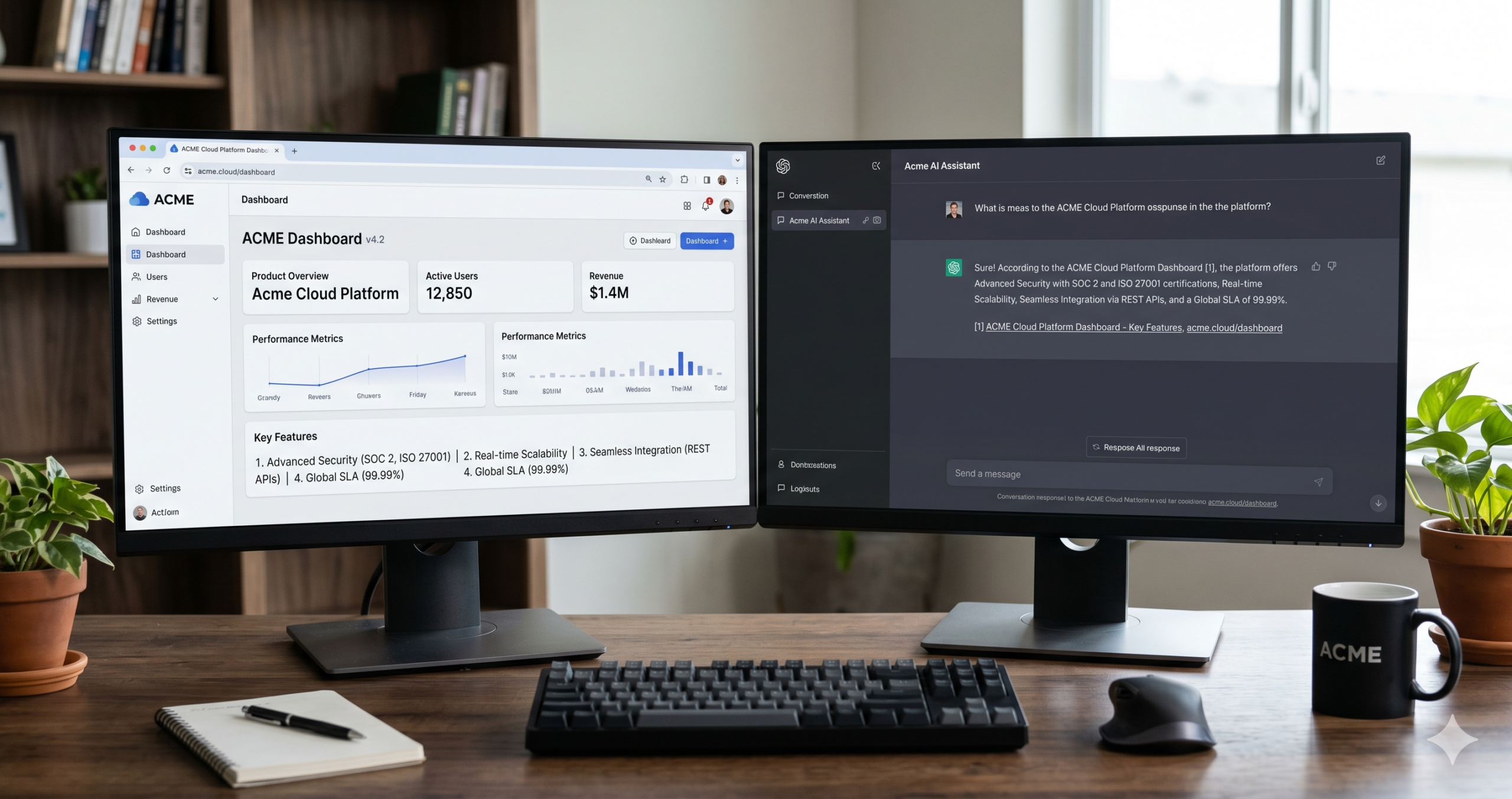
Your buyers have changed where they start their research. They are no longer typing short keyword strings into Google and scanning ten blue links. They open ChatGPT, Perplexity, or Google AI Overviews and ask a direct question. They get a synthesized answer with a handful of source citations. If your brand is not one of those citations, you do not exist in that conversation.
AEO brands are companies that have made a deliberate decision to show up inside AI-generated answers. This is not about chasing every new marketing acronym. It is about understanding that AI search has already changed how software buyers research, compare, and decide. The question is not whether this matters. The question is whether your content is built to be cited.
In 2026, the AEO software category grew over 2000% according to G2 research, as companies scrambled to understand why pipeline was thinning despite stable Google rankings. This article breaks down what AEO means for software brands, why most companies are still invisible in AI answers, and what you need to build to close that gap.
What Does It Mean to Be an AEO Brand?
Answer Engine Optimization (AEO) is the practice of structuring your content so that AI platforms can extract, trust, and cite it when answering user queries. AEO brands do not just publish content. They publish content that is built to be machine-readable, source-cited, and credibility-signaled.
The core distinction is this: traditional SEO drives website traffic through rankings. AEO shapes how AI represents your brand when a buyer skips search entirely. According to HubSpot’s AEO Grader research, the key difference is that SEO gets you a click while AEO earns you the answer slot.
Software companies that treat AEO as an optional extension of their SEO program will fall behind those that treat it as the primary distribution layer for content authority. The gap is already forming.
How AI Platforms Decide Which Brands to Cite
AI systems like ChatGPT, Perplexity, and Google AI Overviews do not rank content the way Google does. They build answers through a process of multi-source consensus. When a user asks a question, the system evaluates which sources are authoritative, consistent across the web, and structurally easy to extract.
Three factors carry the most weight. First, entity clarity: does the AI clearly understand what your company does, who it serves, and what category you belong in? Second, content structure: are your answers placed under clear headings where extraction logic can find them? Third, third-party signals: are you mentioned consistently in relevant communities, review platforms, and industry publications?
Why Most Software Companies Are Invisible in AI Answers
The most common failure pattern is writing good content with poor structure. Content that answers the right questions but buries the answers inside long paragraphs cannot be extracted by AI retrieval systems. They need a clear heading, a direct opening sentence, and a tightly scoped answer.
The second failure is treating your website as the only signal. AI models build their world view from a broad ecosystem of sources. If your brand only lives on your own domain, you are a thin signal. AEO brands appear in third-party articles, review platforms, community discussions, and authoritative directories.
What Content Structure Do AEO Brands Actually Use?
The brands getting cited consistently share one structural pattern. They make it easy for an AI model to identify exactly what they answer, who they are, and why they are credible. That requires more than clean copywriting.
Answer-First Formatting
Every piece of content targeting an AEO outcome should open each section with a direct answer within the first two sentences. This is not about dumbing the content down. It is about placing the extractable signal where AI retrieval logic looks for it.
The structure that works: lead with a concise definition or direct answer, follow with supporting evidence, then add depth and context. This mirrors the format AI systems reward when they surface content as a citation.
Definition-Style Answer: What Is AEO?
Answer Engine Optimization (AEO) is the process of structuring content so AI-powered platforms like ChatGPT, Perplexity, and Google AI Overviews can extract and cite it in direct answers. AEO focuses on content clarity, entity signals, and third-party authority rather than keyword ranking alone.
Schema Markup and Structured Data
Schema markup tells AI crawlers and search engines exactly what type of content they are reading. For AEO brands, FAQPage schema, HowTo schema, and the Organization schema are the most valuable implementations.
The FAQPage schema in particular creates a direct pipeline from your content into featured snippet placements and AI overview citations. If you are a software company running WordPress and Rank Math, these schema types can be added without developer support.
Checklist: Is Your Content AEO-Ready?
Use this before publishing any article targeting AI citation:
- Each section opens with a direct answer in the first two sentences
- Questions are used as H2 and H3 headings, not keyword-stuffed statementsThe
- FAQ Page schema is applied to any page with a questions section
- The article covers the specific question a buyer would ask an AI, not just a broad topic
- Brand, category, and audience are clearly defined in the opening paragraph
- At least two third-party publications mention your brand in the same context
How Do AEO Brands Build Third-Party Citation Authority?
Your website alone is not enough. AI models weigh sources that are cited and validated across multiple independent platforms. The brands earning consistent AI citations in 2026 have built what you might call a citation surface area beyond their own domain.
According to a 2026 AEO benchmarking study cited by Quora’s marketing research, brands that publish original data in their content receive AI citations at nearly three times the rate of brands that rely on repurposed industry statistics. That finding has direct implications for content strategy.
Where AEO Brands Invest Their Off-Site Presence
Review platforms with editorial signals (G2, Capterra, Product Hunt) carry meaningful weight because AI models recognize them as trusted aggregators. Analyst publications and industry comparison articles carry even more weight when they include structured comparisons with named competitors.
Community platforms matter too. Answers published on platforms like Reddit, Stack Overflow, and Hacker News that become consistently upvoted sit inside training data that large language models draw from. Sustained, accurate participation in those communities builds a web signal that your website alone cannot replicate.
The Observation from Content Work with Software Companies
One pattern that stands out across software content programs: brands that produce one genuinely original data point per quarter see measurably better AI citation performance than brands producing higher volumes of derivative content. A single proprietary benchmark, a survey of customers, or a detailed breakdown of internal platform data becomes a primary source. Primary sources get cited. Derivative summaries do not.
The mistake most teams make is treating content production as a volume exercise. Ten articles that restate what ten other articles have already said contribute almost nothing to AI citation authority. One article built around real experience or original data can anchor your brand in AI answers for months.
How Does AEO Differ for B2B Software Brands Specifically?
B2B software buyers behave differently from consumer audiences when using AI search. They ask more specific, comparison-focused questions. They want to know how platforms differ, what integrations exist, what the pricing model looks like, and what teams similar to theirs have chosen.
This means the content architecture for B2B AEO brands needs to go deeper than awareness-level answers. You need content that addresses comparison queries, use-case specifics, and category-level questions that arise mid-buyer-journey.
What Content Types Earn B2B AI Citations?
Comparison content earns citations consistently because AI models frequently surface comparison-style answers when users ask recommendation questions. A software company that has published clear, credible comparisons of itself against category competitors gets pulled into answers where it might otherwise be absent.
Use-case content mapped to specific buyer scenarios works well because it matches the conversational structure of AI queries. A DevOps team asking about deployment pipeline tools is asking a different question than a product team asking about roadmap tooling. Content that speaks to the exact context earns more targeted citations.
Content Types by Citation Potential for Software Brands
Original research and benchmarks: Highest
Comparison and alternative pages: High
Use-case specific guides: High
Definition and explainer articles: Medium-High
Generic thought leadership: Low
How Can You Measure Whether Your AEO Content Is Working?
Traditional SEO measurement (rankings and organic sessions) does not capture AI citation performance. AEO brands need a different measurement approach. The most direct signal is manual: search your category keywords and company name across ChatGPT, Perplexity, and Google AI Overviews weekly.
Document which prompts return citations, which competitors appear instead of you, and which pages are doing the citation work. That map tells you exactly where the content gaps are and which pages need structural improvement.
Metrics That Matter for AEO Performance
Share of voice in AI answers is the core metric. Track which AI platforms cite you, on which query types, and with what frequency. As of 2026, platforms like OmniSEO and SkyDrover automate this tracking across ChatGPT, Perplexity, Gemini, and Copilot simultaneously.
Brand mention velocity across third-party sources is the second important signal. If citations in independent publications, review platforms, and community forums are increasing, AI citation rates typically follow within four to eight weeks. The relationship is not immediate but it is consistent.
A Decision Framework for Prioritizing AEO Improvements
If you are starting from zero, run this sequence:
- Audit your current AI visibility: search your top ten category queries across ChatGPT and Perplexity and document who appears
- Identify your highest-value pages: find which existing articles are closest to answer-ready and restructure those first
- Add schema markup to every page with a question-and-answer section
- Publish one piece of original data in the next 60 days
- Secure three to five new third-party mentions in authoritative industry sources within 90 days
- Re-audit AI visibility at 60 and 90 days to track citation changes
The Software Brands Building AEO Authority Now Will Be Hard to Displace
AEO is not a trend that will pass. The shift toward AI-mediated search reflects a durable change in how buyers research and decide. Software companies that build citation authority now, through structured content, entity clarity, and third-party signal investment, are creating a compounding asset.
The brands that wait will find that competitors have already established the citation patterns that AI models default to. Once a brand is embedded as a trusted source in AI answers, displacing it requires sustained effort over many months.
If your software company is ready to build content that earns AI citations and reaches technical buyers with genuine practitioner depth, the Content Engine at Qualipulse is built specifically for that outcome. For companies that also want to build authority through LinkedIn, the LinkedIn content program for software companies runs in parallel with your long-form strategy.
Frequently Asked Questions
What are AEO brands?
AEO brands are companies that have structured their content strategy specifically to earn citations inside AI-generated answers on platforms like ChatGPT, Perplexity, and Google AI Overviews. They optimize for machine extractability, entity clarity, and third-party authority rather than keyword rankings alone. As of 2026, the distinction between AEO brands and those without an AI search strategy is becoming a meaningful competitive gap.
How is AEO different from SEO for software companies?
SEO drives traffic through search rankings. AEO earns your brand a direct citation when an AI platform answers a user query. For software companies, the key difference is that SEO requires a click while AEO means your brand is the answer. Many software buyers in 2026 begin their research in ChatGPT rather than Google, which means AEO reaches buyers before they even arrive at a search results page.
What content structure do AEO brands use to earn AI citations?
AEO brands use answer-first formatting where each section opens with a direct answer in the first two sentences. They use questions as headings rather than keyword statements. They apply FAQPage and Organization schema markup. They publish original data rather than repurposing industry statistics. These structural choices make content easy for AI retrieval systems to extract and attribute.
How long does AEO take to show results for a software brand?
Structural content improvements like answer-first formatting and schema markup can begin influencing AI citations within four to eight weeks for well-indexed domains. Third-party authority building takes longer, typically three to six months, as external mentions accumulate and AI models begin recognizing the brand as a consistent source across multiple platforms. Consistent publication matters more than sporadic high-effort campaigns.
Do AEO brands need to abandon their existing SEO strategy?
No. AEO is not a replacement for SEO. Strong SEO still drives organic traffic and supports domain authority, which in turn supports AEO performance. The most effective software brands in 2026 treat AEO as an extension of their existing content program rather than a separate workstream. Answer-first formatting and schema markup improve both SEO and AEO performance simultaneously.
What is the most common mistake software companies make with AEO?
The most common mistake is treating content production as a volume exercise. Publishing large quantities of derivative content that restates what other sources have already covered contributes almost nothing to AI citation authority. The brands that earn citations consistently publish original data, share real experience, and write content that answers specific questions a buyer would actually ask an AI platform during their research phase.
How do AEO brands track their AI search visibility?
The most direct method is manual auditing: searching your top category queries across ChatGPT, Perplexity, and Google AI Overviews weekly and documenting which brands get cited. Specialized tools like OmniSEO and SkyDrover automate this tracking across multiple platforms simultaneously, providing citation frequency data and competitive gap analysis. Brand mention velocity in third-party publications is a leading indicator for future AI citation performance.
Does content written by practitioners perform better in AI search than agency-produced content?
Based on observation across software content programs, practitioner-written content that includes specific technical detail, real examples, and original data earns citations at a higher rate than generalist-researched content. AI models weight specificity and credibility signals. Content that demonstrates genuine domain knowledge through concrete claims and verifiable detail performs better than content that covers a topic at surface level, regardless of production quality.