AI search visibility audit
We run the questions your buyers ask through ChatGPT, Perplexity and Google AI Overviews and record who gets cited. You see where you show up, where competitors show up, and which pages could close the gap.
 Led by George Ukkuru · 26 years in software engineering
Get cited where your buyers ask first.
Our AI SEO services get SaaS, QA and DevOps companies cited in ChatGPT, Perplexity and Google AI Overviews. We fix the technical SEO underneath, then publish answer-ready pages that AI search can quote. Every page is reviewed by someone who has shipped software.
A CTO comparing test automation tools no longer opens ten tabs. They ask ChatGPT or Perplexity for a shortlist, or read the Google AI Overview at the top of the results page.
If your company is not in that answer, you are not on the shortlist. And you never find out you were left off.
Ranking is no longer enough. You need to be cited.
The good news: the basics still count. Google’s own guidance on AI features in Search says a page has to be indexed and eligible for a snippet before it can appear in AI Overviews. Solid technical SEO is the entry ticket. AI SEO is what gets you picked.
Here is what our AI SEO methods produced on a content site we manage, measured in Google Search Console and an AI citation tracker over three months.
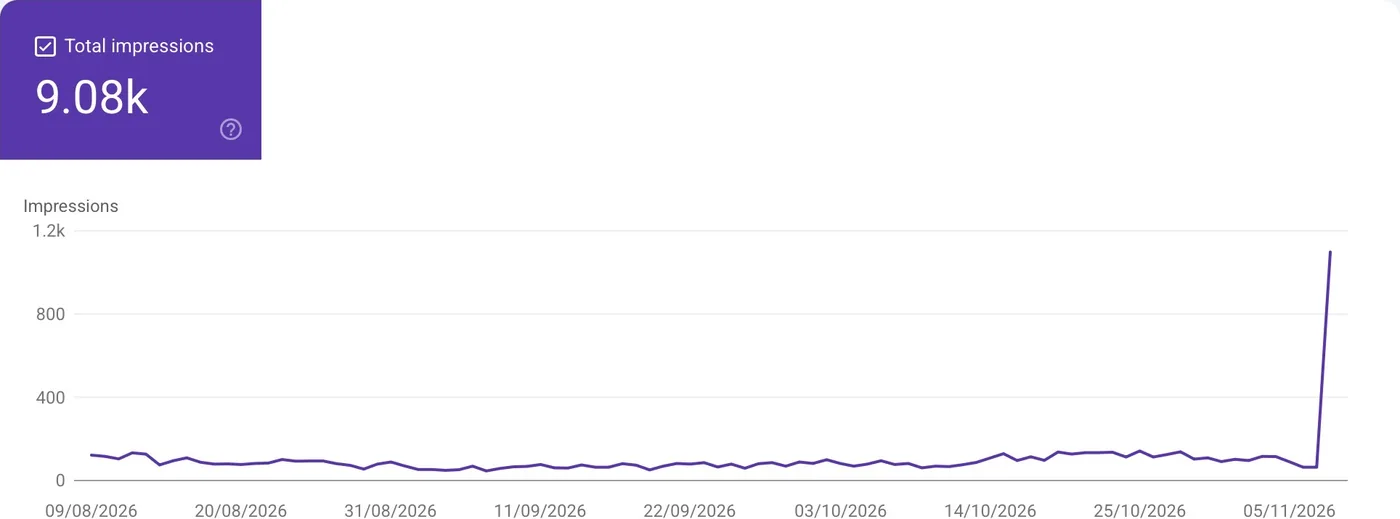
Citation data: Microsoft Copilot and partners, AI citations report, 3 months to Nov 2026.
The last number is the useful one. A well-structured page you already own can keep earning AI visibility long after it was published. Refreshing existing pages is often the cheapest place to start.
AI search can only cite pages it can crawl and trust. Here is what our technical SEO work delivered for a client.
Five pieces of work, run as one plan. You get the technical fixes and the content, so nothing falls between two vendors.
We run the questions your buyers ask through ChatGPT, Perplexity and Google AI Overviews and record who gets cited. You see where you show up, where competitors show up, and which pages could close the gap.
Indexing, crawl errors, page speed and internal links come first. Then we add schema markup and check your robots.txt rules for AI crawlers.
We also publish an llms.txt file. It is a young proposal, so we treat it as a cheap extra, not a ranking trick.
Pages that answer the question in the first two sentences, then back it up with specifics from someone who has done the work. Our Content Engine team writes them and a practitioner reviews every technical claim.
AI search trusts brands that other sites talk about. We get your company described the same way across industry publications, podcasts, comparison pages, community threads and your founder’s LinkedIn.
Each month you get AI citations by platform, Google rankings for your target keywords and AI-feature impressions from Search Console. Plain numbers, and what we plan to do next.
Four steps, in this order. Fixing the foundation before writing new pages saves you money.
We list the prompts your buyers really ask, test them on each AI platform and crawl your site. You get a short, ranked list of fixes, not a 90-page PDF nobody reads.
We clear the technical blockers: indexing, crawl errors, schema, AI crawler access and internal links. Small fixes here often unlock pages you already have.
We rewrite your strongest pages to answer first, then fill the gaps with new pages and FAQs. A practitioner checks every claim before it goes live.
Every month we report citations, rankings and AI-feature impressions. We keep what works, drop what doesn’t, and show you the honest numbers either way.
You will see this work sold as AI search optimization, answer engine optimization services or generative engine optimization services. Different labels, same job: make your site easy to find, easy to understand and easy to quote.
| Area | Traditional SEO | AI SEO |
|---|---|---|
| Goal | Rank a page in Google’s results | Get your brand named and cited inside AI answers |
| Where buyers see you | The list of blue links | ChatGPT, Perplexity, Google AI Overviews and the blue links |
| Content format | Long articles built around a keyword | Direct answers, clear structure and facts worth quoting |
| Technical focus | Crawling, indexing and page speed | All of that, plus schema, AI crawler access and llms.txt |
| Authority signals | Backlinks | Backlinks, brand mentions and a clear entity |
| What gets measured | Rankings, clicks and traffic | Citations and AI-feature impressions, plus rankings and traffic |
AI SEO does not replace traditional SEO. It sits on top of it, which is why we never sell one without the other.
There is no best AI SEO agency for everyone. For a software company, the best AI SEO agency is one that understands your product well enough to write answers your engineers would sign off on.
George Ukkuru spent 26 years in software engineering, wrote Software Test Estimation Simplified and hosts the Automation Hangout podcast. A practitioner reviews every page before it ships. AI search rewards first-hand detail, and you can’t fake that.
We read your docs, your release notes and your robots.txt. Schema, crawl issues and site structure are part of the job, not an upsell. Most AI SEO company pitches lead with dashboards. We lead with the pages.
Every method on this page has already earned AI citations and AI Overview impressions on a site we manage. You saw the numbers above. We only sell what we have watched work.
Every engagement is led by George, so you work with an AI SEO consultant who has done the job, not an account manager reading a script. Want the people who find you in AI search to keep hearing from you? Pair this with AI email marketing.
An AEO agency gets your product named when buyers ask AI tools for a shortlist. For B2B SaaS, that means answering the questions buyers ask late in an evaluation, not just the definitions at the top of the funnel.
A SaaS deal has an engineer testing the product, a manager comparing tools and someone signing the contract. We build a prompt set for each of them: “best tool for this job”, “Tool A vs Tool B”, “does it integrate with our stack”, plus the security and pricing questions that come up before procurement.
Comparison pages, integration pages, use case guides and FAQs that answer in the first two sentences. A practitioner checks every technical claim, because AI answers repeat what you publish, mistakes included.
AI tools lean on review sites, comparison articles and community threads. We work to get your product described the same way across those sources, so the description AI repeats is the one you want buyers to hear.
How we approach it: audit the prompts first, fix the technical base, rewrite the pages closest to a buying decision, then track citations every month. Plans are $400 for 6 pages and 20 prompts, $949 for 12 pages and 30 prompts, and $1,349 for 20 pages and 40 prompts.
AEO tracking tools are useful, and some teams don’t need an agency at all. Here is an honest look at the trade-off.
| Area | Self-serve AEO tool | Full-service AEO agency |
|---|---|---|
| What you get | Dashboards that show where your brand is cited or missing across AI platforms, often with suggestions | Tracking plus the work itself: technical fixes, rewritten and new pages, schema and mention building |
| Who does the work | Your team reads the reports and makes every change | The agency makes the changes, and your team reviews and approves them |
| Cost model | A software subscription, usually tiered by how much you track | A fee set by scope. Ours is priced by pages and prompts, starting at $400 for 6 pages and 20 prompts |
| Best for | Teams with a writer, an SEO lead and engineering time to act on the data | Teams that know AI search matters but have nobody free to do the work |
| Main risk | Data that nobody acts on | Paying for pages that don’t match your product, so check the agency’s technical depth first |
Some teams use both: a tool for ongoing tracking and an agency for the fixes and pages. If you already pay for a tracker, ask any agency you talk to, us included, to work from its data instead of adding another dashboard.
New to the topic? Start with our guide: What is an AI SEO service?
More on our blog →AI SEO services make your website easy for ChatGPT, Perplexity and Google AI Overviews to find, understand and cite. The work combines technical SEO, schema markup, AI crawler access, answer-ready content and brand mentions, then tracks how often AI search names you.
A regular SEO agency works to rank your pages in Google's results. An AI SEO agency also works to get your brand quoted inside AI answers. That adds prompt testing, AI crawler checks, schema, entity building and citation tracking on top of classic SEO.
There is no fixed date, and anyone who gives you one is guessing. Technical fixes can show up once your pages are recrawled. Citations take longer because they depend on your authority and on how crowded your topic is. We report what changes every month so you can judge progress for yourself.
No. Nobody controls what ChatGPT, Perplexity or Google choose to cite, so no honest agency can guarantee it. What we can promise is the work: a clean technical base, pages worth quoting and monthly tracking that shows exactly where you stand.
Answer engine optimization (AEO) means shaping your content so AI tools and search features can lift a direct answer from it. In practice: a clear question, a short answer up top, supporting detail below and structured data. It is one part of our AI SEO services.
Yes. AI search tools lean on pages that are already crawlable, indexed and trusted, and Google's AI Overviews only draw on pages in its index. If your technical SEO is weak, AI SEO has nothing to build on.
Hire an AEO consultant when AI tools name your competitors and not you, and nobody on your team has the time or the know-how to fix it. Other good triggers are a product launch, a move into a new category, organic leads dropping while rankings hold steady, or a tracking tool full of data nobody acts on. If you already have an SEO lead and writers with spare capacity, a self-serve tool may be enough to start.
Get a free AI SEO audit. We will test the prompts your buyers use and show you who gets cited today, and why it isn’t you yet.